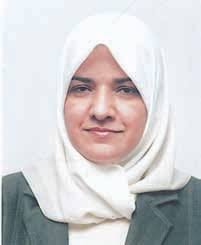
Al -Zaru, Ibtisam
Jordan University of Science & Technology Irbid/ Jordan
Abstract Title:
Health-Promoting Lifestyle Behaviors and Associated Factors Among Registered Nurses
Biography:
I earned my Ph.D from the University of Ulster, Faculty of Life and Health Sciences/UK. I am currently an associate professor in the Adult Health Nursing Department at the Faculty of Nursing, Jordan University of Science and Technology (JUST). I have previously served as a Department Head, Vice Dean, and Dean for several years. I have published numerous research papers in reputable peer-reviewed journals.
Research Interests:
Healthy lifestyle behaviors are essential for maintaining well-being and improving quality of life. As caregivers and health promoters, nurses are expected to model such behaviors, yet their demanding roles may hinder this. This study examined health-promoting lifestyle behaviors (HPLBs) among registered nurses (RNs), their association with sociodemographic factors, and their effect on quality of life (QOL).
Methods:
A descriptive, cross-sectional, correlational study was conducted among 169 RNs at King Abdullah University Hospital (KAUH). Data were collected using the Health-Promoting Lifestyle Profile II (HPLP-II) and the WHOQOL-BREF questionnaire. Descriptive and inferential statistics were analyzed using SPSS version 25.0 with a significance level of p < 0.05.
Results:
Participants’ mean age was 31.9 years; most held a bachelor’s degree (75%) and worked rotating shifts (78%). The mean total HPLP-II score was low (M = 2.28, SD = 0.46), with the highest scores in spiritual growth (M = 2.67) and the lowest in physical activity (M = 1.96). Age and years of experience were negatively correlated with overall HPLB and several subscales, including spiritual growth and stress management. Significant differences in HPLB dimensions were observed by workplace, educational level, and smoking status. Hierarchical regression showed that sociodemographic factors explained 14% of QOL variance, while HPLP-II subscales explained 30.6%, with spiritual growth emerging as the strongest predictor of QOL.